In recent years, the rise of Large Language Models (LLMs) has revolutionized the way we process and retrieve information. These models, powered by vast amounts of data, have demonstrated remarkable capabilities in generating human-like text and providing us with information limited only by our imagination. However, a significant challenge persists: factual accuracy, especially on a global scale.
A recent publication by Moaryeri et al. provides an initial look at this issue by evaluating the accuracy of 20 different LLMs in recalling 11 different country-specific statistics (e.g., population, GDP, and others found in World Bank data). The findings reveal a quantitative comparison in accuracy of LLMs across different regions and income levels.
Regional Disparities
Moaryeri et al.’s research provides a critical assessment of LLM performance, highlighting the persistent struggle to create globally equitable algorithms. By examining how well these models recall factual data about various countries while using controlled and consistent prompts, the study offers a benchmark for measuring geographic bias.
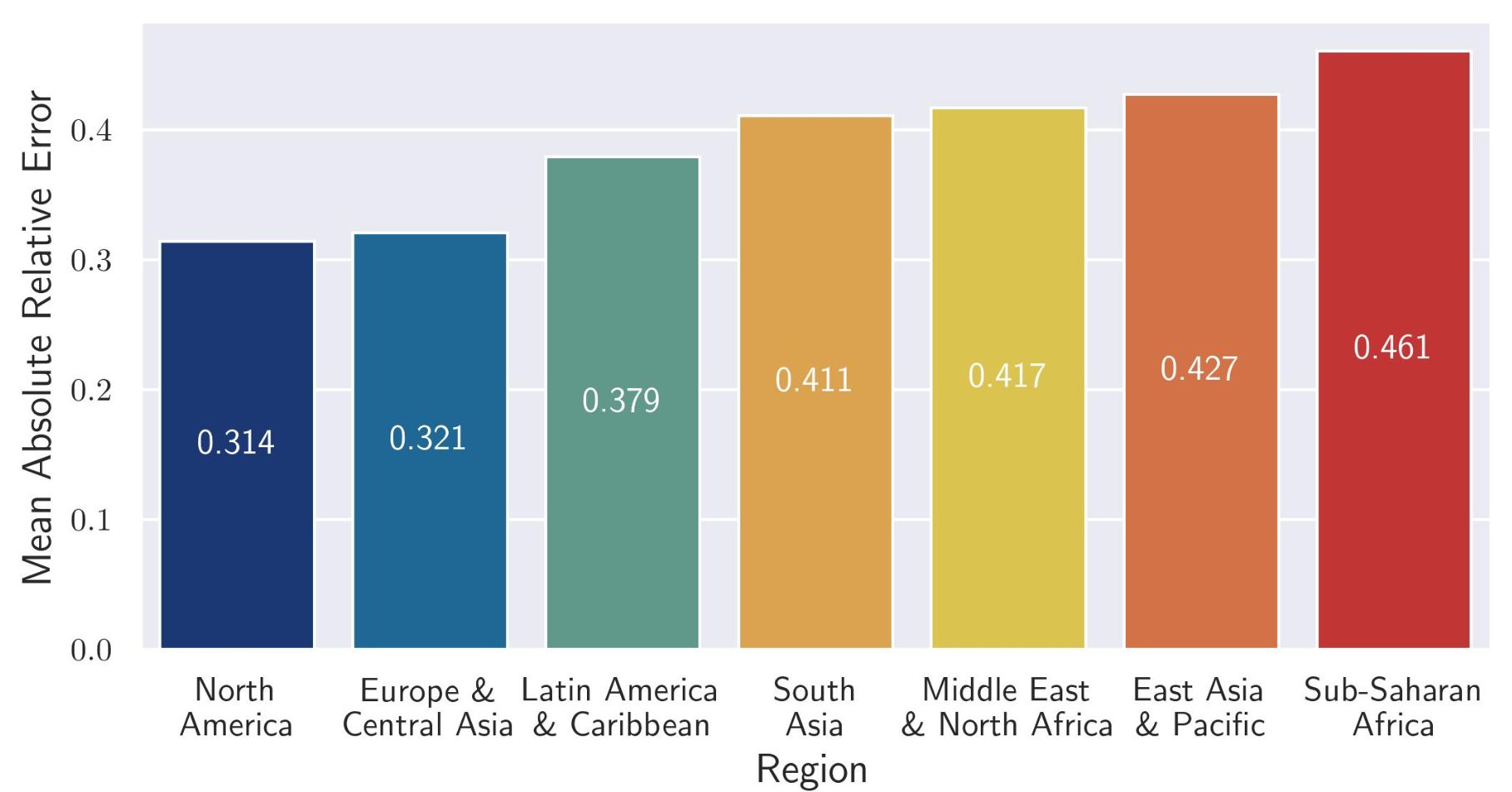
This article quantifies algorithm performance using Absolute Relative Error, defined as |a - b| / max(a, b), where a and b are the LLM generated value and the ground truth value from World Bank data. When analyzing the data by region, we can see 50% higher error rates in data related to sub-Saharan Africa compared to the North American region.
Income-Level Disparities
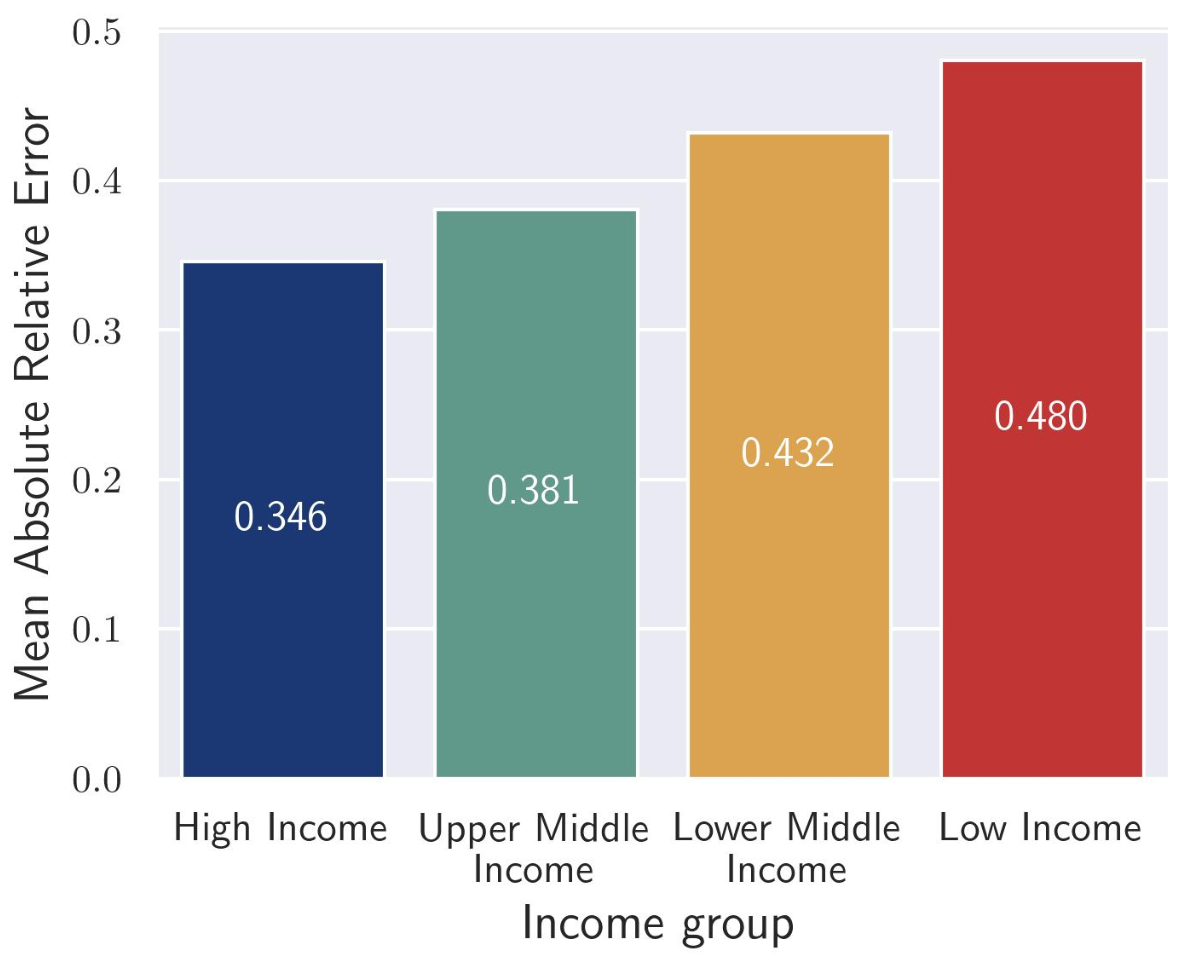
Similarly, when countries were reclassified into relative income groupings rather than regions, a similar result was observed. Although this is expected given the correlation between a country’s region and its income level, the results underscore the need to consider multiple types of classification when examining biases in LLM training and development.
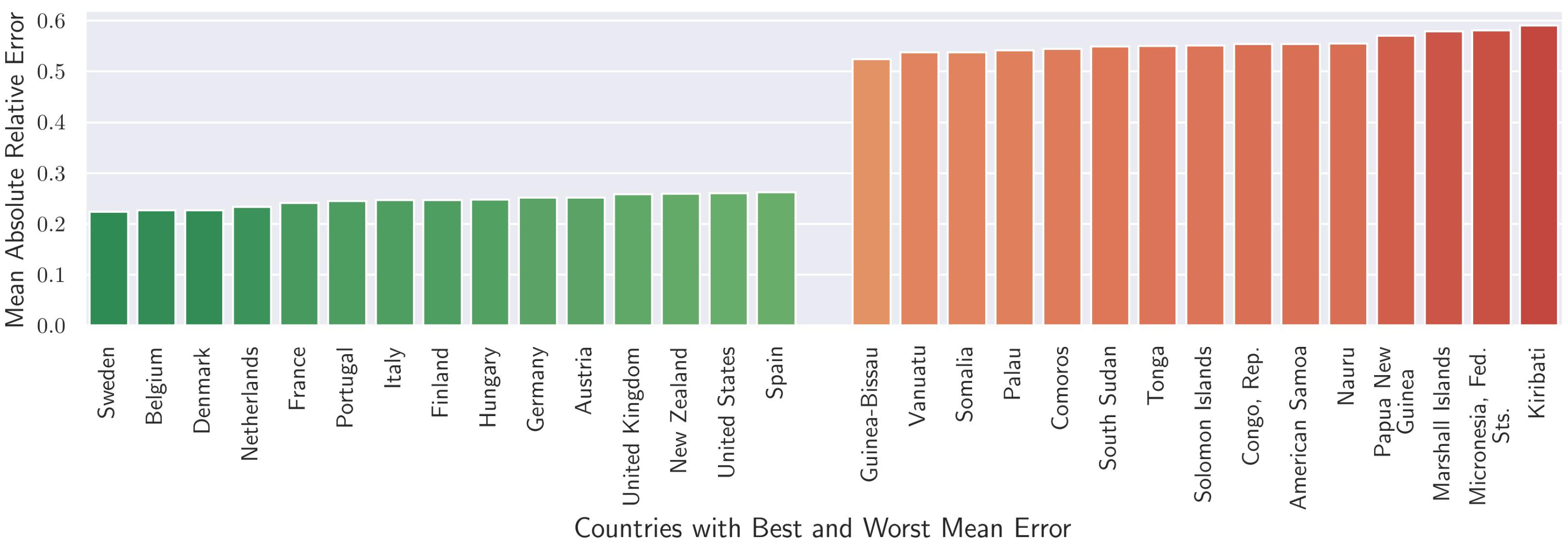
Delving deeper into the data, the disparity in LLM accuracy becomes even more pronounced when examining individual countries. Of the top 15 countries with the most accurate responses, all 15 belonged to the high-income group. Of the bottom 15 countries with the least accurate responses, all 15 belong to the low-income group.
Implications and Solutions
The findings from this study have far-reaching implications, particularly as LLMs become more integrated into our daily lives and various sectors such as healthcare, education, and finance. Geographic and socioeconomic biases in these models can perpetuate existing inequalities, limiting access to accurate information for disadvantaged groups. Addressing these biases is crucial to ensuring that the benefits of AI are equitably distributed.
To mitigate these biases, several strategies must be employed:
- Inclusive data collection: Ensure diverse and representative datasets, including sourcing high-quality data from underrepresented regions.
- Bias-aware training: Refine model training practices using fairness-aware machine learning techniques to reduce the impact of biased data.
- Transparency: Share methodologies, datasets, and evaluation metrics to foster collaboration and drive progress towards more equitable AI.
As LLMs continue to evolve and permeate various aspects of society, addressing geographic and socioeconomic biases is not just a technical challenge but a moral imperative. The journey towards bias-free AI is ongoing, and it requires collective effort, innovation, and a commitment to global fairness.